Moving to Portugal in Your 20s: My Experience in Covilhã and Lisbon


If you had told me a year ago that by now I’d be living in Portugal (again), I probably would have laughed. Portugal wasn’t on my radar as a place to call home back then; I hardly knew anything about it. But here I am today, and honestly, I’m so glad I took the leap.

Why I Originally Chose Covilhã Over Lisbon or Porto

Back in February, I moved to Covilhã, a small city tucked near Serra da Estrela, the highest mountain in continental Portugal. Most people head straight to Lisbon or Porto, so why didn't I do that? I needed some time away from daily life, and I decided to follow love all the way to Covilhã.

Covilhã is a peaceful student city with stunning mountain views, a super affordable cost of living, and a laid-back vibe. The food is delicious, the nearby villages are adorable, and the scenery is next-level. The city sits between 400 and 800 meters above sea level, so you get epic viewpoints everywhere you go. Don't mind the height difference; Covilhã has free elevators to help you get around the hilly streets, so no car is required! I lived there for two months while finishing my final major project for university, and it was exactly the quiet escape I needed.


Fast Forward: Life in Lisbon

Nine months later, I am now living in Lisbon. While Covilhã was perfect for a fresh start, Lisbon has so much more to offer in terms of education, jobs, and things to do in general.


What's the Real Cost of Living in Portugal?

Portugal is budget-friendly compared to other Western European countries. Here’s a quick breakdown:

A beer with friends: As little as €1, if you are willing to look.
Movie ticket: Around €7 (look for discounts on the WTF app!).
Lunch deal: Main course, drink, dessert, and coffee from just €6. Look for 'Tascas'.
Nightlife: Clubs are often free before 12:30am with an ESN card. So, get one if you can.
Mobile data: NOS WTF usually* offers unlimited social media, unlimited calls/texts, and dedicated data for YouTube/Netflix. Keep an eye out for discounts on Uber, movies, and much more. (*plans subject to change).
Getting around: Bolt App is usually the most affordable among others (use the U4RCPQ code upon activation for a discount). A 5am ride to the airport from my place? Only €4.50! Split it with friends and it becomes even cheaper.

How to Learn Portuguese for Free

Worried about the language barrier? Don’t be! The government offers a free program to study Portuguese at your own pace. As far as I know, you can also sign up for on-site classes.

Must-Try Portuguese Foods

Ready to eat like a local? Here are my top picks:
Sweets: Pastéis de Belém, Travesseiros de Sintra, Ovos Moles de Aveiro
Seafood: Bacalhau com Natas, Bacalhau à Brás, Sardinhas Assadas
Meat: Alheira, Bifanas, Cozido à Portuguesa, Francesinha

Is Portugal a Good Erasmus Destination?

Absolutely! If you love colourful streets, sandy beaches, stunning landscapes, and friendly people, Portugal is the place for you. Besides Lisbon and Porto, other popular student cities are Faro, Coimbra, Évora, Aveiro, and Covilhã.

My Favourite Spots in Lisbon

If you decide to visit Lisbon for any occasion, whether it's your Erasmus destination or simply home for a few days, don’t miss these places:

Torre de Belém
Miradouro da Graça
Miradouro de Santa Luzia
Miradouro Parque Eduardo VII
Miradouro de São Pedro de Alcântara
LX Factory (especially on Sundays!)
Feira da Ladra (Tuesdays and Saturdays)


Are you thinking about moving to Portugal? Have you lived here before, or do you have questions? Drop a comment below!

{All photos are my own. If you want to repost, please give credit.}

- Cris

Discovering Croatia's Biggest Cities: Zagreb and Split


It goes without saying that if you are a big fan of the TV series Game of Thrones, you’ll love exploring Croatia’s streets, many of which were featured in the show. As I haven’t watched the series myself, I’ll focus on what makes Croatia special beyond its TV fame.

First Things First: Plan Smart

Croatia is beautiful, but summer crowds can be overwhelming. High season runs from July through September, meaning accommodation prices skyrocket and tourist hotspots become packed. If you’re flexible with your travel dates, consider visiting in May or late September to save money and avoid the crowds.

Be mindful of tourist traps. Many restaurants hand tourists English menus with inflated prices. If possible, ask for the local menu or check reviews beforehand to avoid overpaying.


Split: The Largest Coastal City in Croatia

I lived in Split for a couple of months, and one of my favorite activities was simply walking around its charming streets. The narrow alleys and picturesque architecture make it hard not to stop every few seconds to snap a photo. Some bars are affordable and cozy, perfect for embracing the Croatian concept of Pomalo—“take it easy.”

Must-See Attractions

Diocletian's Palace: A UNESCO World Heritage Site since 1979, this ancient Roman palace is a must-visit.
Grgur Ninski Statue: Don’t forget to rub its shiny big toe for good luck. It’s a fun tradition!
Park Šuma Marjan: A green oasis perfect for hiking or relaxing. Head to Vidilica bar at the top for stunning panoramic views of Split.

Best Beaches

Plaža Ježinac: My favourite beach—quieter than others and just a pleasant walk from my apartment.
Plaža Bene: Great for families, with shaded areas and amenities.
Plaža Kašjuni: Beautiful but often overcrowded during peak season.
Bačvice Beach: Famous for its proximity to the city centre but crowded and touristy. It’s popular among young families and nightlife enthusiasts due to nearby bars and clubs.


Zagreb: Croatia’s Capital in 24 Hours

Zagreb’s city centre is compact, making it ideal for exploring on foot. I recommend joining a free walking tour—it lasts about two hours and provides fascinating insights into the city’s history.

Historical Highlights

Ban Jelačić Square: Locals simply call it “the square.” Named after Ban Jelačić, who became governor in 1848 during the revolution.

Lotrščak Tower Cannon: Since 1877, a cannon fires daily at noon to mark midday—a tradition that sets the clock for church bell ringers across the city.

Zagreb Cathedral: At 108 meters tall, it’s Croatia’s tallest building.

Unique Features

World’s Shortest Funicular: Only 66 meters long, this funicular has been operating since the 1890s as Zagreb’s first public transport.

Gas Lanterns: Zagreb is one of only three capitals (alongside Berlin and London) where gas lanterns are manually lit every evening—a charming tradition.

Food Recommendation

If you’re hungry after your tour, try Štrukli. This traditional dish consists of dough filled with cottage cheese and eggs; it can be boiled or baked. It’s delicious but not suitable for vegans.


A Glimpse into Croatia’s Recent History

Croatia has been a peaceful country since 1995, but its history is marked by conflict. In 1991, Banski Dvori (the presidential residence) was bombed in an attempt by Serbia to conquer Croatia. The president narrowly survived the attack.

Conclusion

Croatia offers much more than stunning beaches—it’s rich in history, culture, and unique traditions. Respect its streets, beaches, and citizens as you explore this beautiful country.

Have you visited Croatia? What was your experience like? Do you have favourite places or tips to share? Leave a comment below!

Please respectfully mention the blog if you share my pictures.

Cris goes to BOSNIA.

Only about 10 days ago, I moved to Croatia, and I have already decided to travel to nearby Bosnia and Herzegovina for the weekend. I was only gone for a couple of days, but this has definitely been one of the most interesting trips I've been on so far, and soon you will discover why.

Food in Sarajevo.
As soon as I woke up after a good night of sleep, one of the things I was most excited for was actually breakfast. I wanted to try new foods, and there was no time to lose, so instead of the usual croissant and cappuccino, I ordered Burek and Bosnian coffee at what we were told was the best place in town, called Buregdžinica Bosna, and this is what I received:


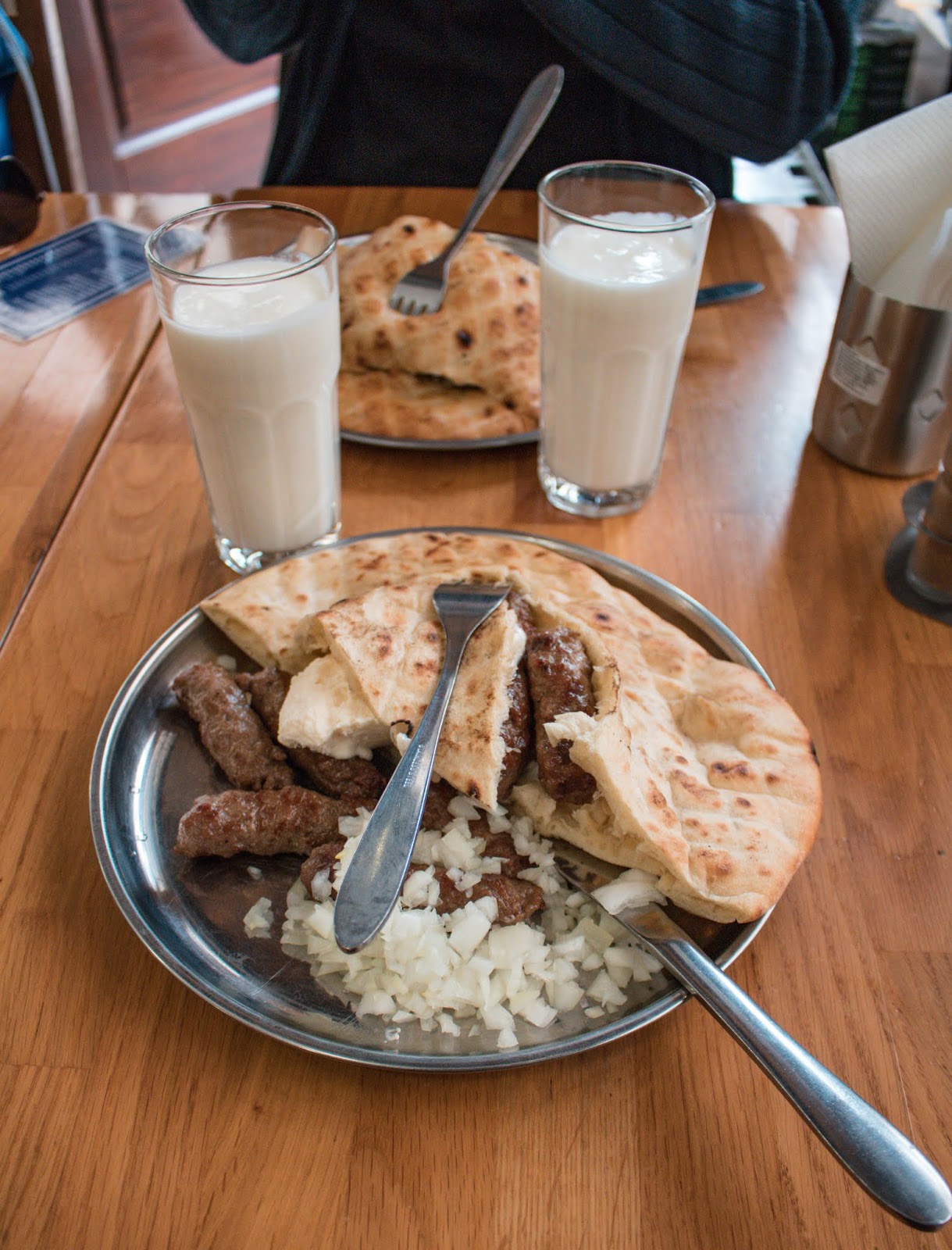
It was absolutely delicious. Those were baked pastries filled with different fillings, and we obviously ordered all kinds because we wanted to try them. One was with cheese, the second with meat, the third with potatoes, and the last with spinach. With our coffee, they also brought Turkish delights. The whole coffee set was made of copper. Everything was absolutely fantastic... and we literally paid only €2.75 each! Speaking of lunch, you can eat the typical ćevapi for less than €4. We were told that the best place to have one is Ćevabdžinica Željo.


Scenic Views.
There's a gondola lift in the city that just reopened last year. A round-trip ticket costs €10, and there is no student discount. The view from the cable car was absolutely breathtaking. The city is surrounded by mountains, and you can clearly see which part of it is new and which one is the old town. 


Free walking tour with Meet Bosnia.
Given that we knew little about Bosnia before travelling there, we decided to sign up for a free walking tour by Meet Bosnia. They were fabulous. Our tour guide was really nice, smiled the whole time, and was open to questions. To start off, we were told that the city was the centre of the world on three occasions: 1914, 1984, and 1992.
In 1914, the assassination of Archduke Franz Ferdinand of Austria and his wife was the start of the First World War. In 1984, Sarajevo hosted the Winter Olympic Games, and in 1992 the longest siege in modern history started. One of the buildings that burned down during the siege is the city hall, which reopened only in 2014. It suffered a loss of around 2 million books.


Worth mentioning is the legendary story of Inat Kuća, the building with the green balcony. When the Austro-Hungarians wanted to build the current city hall, named Vijećnica, they had to negotiate with the owner of the property, Benderija, who did not want to give up his house and the view over the river. He eventually agreed to give up his property only if they would give him a bag of golden coins and, more importantly, if they would move his house on the other side of the river brick by brick.

Sarajevo is a multicultural city that hosts many nationalities and religious groups. In fact, there are many Croats, Serbs, and Bosniaks, and because of all the different religions, the city hosts many places of worship (mosques, synagogues, cathedrals, and Orthodox churches).

There is a point in the city called "meeting of cultures". If you walk east, you enter the Turkish-looking part of Sarajevo; if you walk west, you enter the Austrian side. It is incredible to see how different the architecture is depending on where you are standing. It is clear that Sarajevo was ruled by the Ottoman Empire and later by the Austro-Hungarian Empire. 


In Bosnia, many things are handmade with copper, especially coffee sets. I couldn't resist, so I bought one, but they also have pens made of bullets and more stuff to choose from. The results of the recent conflicts are still visible, and it was something that particularly touched me.


I haven't mentioned many things about Sarajevo. Still, I could probably continue for hours, so here's a quick list of the things that I haven't mentioned yet that is worth checking out: Sebilj fountain (rumour has it that if you sip from it you will return to Sarajevo in the future!), IIWW Eternal Flame, Sacred Heart Cathedral (the Hungarian architect was inspired by Paris' Notre Dame), Gazi Husrev-beg Mosque (which is the largest historical mosque in the whole country), and last but not least the place where the Archduke Franz Ferdinand of Austria and his wife were murdered:


But Sarajevo is not the only place I visited while I explored this beautiful country; I also walked around Mostar, a cute little town full of shops that sell things made of copper. It's famous for its bridge and, in my opinion, there isn't much to do except walk around.


What Went Wrong.
Obviously, something had screw our plans up. To this day, I don't understand if I got on the wrong bus (even though we specifically asked the driver) or if Bosnia just isn't well connected with its border countries. The bus we were supposed to take was scheduled for 4pm with an arrival time of 7pm. It was meant to cut east through the country, but instead, it took us south, through Mostar, which is where we were supposed to go only on our way back home. What was supposed to be a 3-hour ride was extended by five hours. In perspective, it took 14 hours to reach Split from Milan, and it now took eight hours to reach Sarajevo from Split.

Alright, next...

As we were trying to get off the bus at around midnight, a random guy stuck his head inside the vehicle and asked if we needed a taxi. Yes, we did need one. It was probably the safest way to get to our hostel at that time of night, especially as it was approximately 4 kilometres away from where we were. We asked this person if he was a taxi driver, and he said yes. We asked which one was his car. He pointed out a black vehicle parked on the side of the road, with no proof that he was a real public driver. As we told him so, he replied that he was an Uber driver. However, we knew that there was no Uber in Bosnia, at least not at the time. "No thanks, but we are not getting in a car with you", and he finally admitted, "A real taxi driver will charge you more than me; choose me!"

We eventually took a real taxi, obviously, and we were charged the same amount as this guy. When we arrived at our hostel, a really kind and helpful young woman welcomed us. She gave us all kinds of advice on Sarajevo, and then we went to bed.

On our way back to Croatia, we obviously had to go through passport control. It never happened to me in my entire life, but Rafael and I were the only ones who had to leave the bus and follow the officer into a room where they searched our stuff. We are not sure why we were the only ones. Likely, they chose randomly. Otherwise, I can't explain what made them think that we were possibly dangerous. Anyway...

Bosniaks.
I was really happy with the way locals treated us. Both the people who checked us in at the hostels we stayed at were really nice and friendly. Overall, people at restaurants were kind and accommodating, and when we tried to speak the language, they helped us with the correct pronunciation. I highly recommend signing up for a free walking tour with Meet Bosnia. They are well-prepared and will make you feel at home!

_

I hope that you enjoyed this post about Bosnia. Feel free to ask me any questions in the comments section below and hit the "Follow" button on the right-hand side of the desktop version page. I also took all the pictures in this post, so please cite the blog if you decide to use them. Follow me on Instagram @crisgoesabroad for more pictures of my travels!


- Cris


Cris goes to HONG KONG.


Believe it or not, Cris went abroad... again. This time he, well I, went to Hong Kong. I have never been to Asia before so you can imagine the excitement of experiencing it for the first time. All the countries I have been to before have different cultures from one another but spending one week in Hong Kong has been the most interesting experience up to date.


The culture is so different. The first language is Cantonese, even though they also speak Mandarin, which means that people from Hong Kong can understand Chinese people but usually people from China don’t understand people from Hong Kong. There are many markets all around the city, even at night. The underground is so clean that it shines, there is AC - and yes, it actually works -, the map turns on and off and shows you the direction you are going, which door is going to open, and where you can switch to catch other trains. Also, it is forbidden to eat or drink on public transport. As you wait for the train, there are signs on the floor to show you how you are supposed to line up and leave room for people to get off. 

You are not allowed to smoke unless there are bins with ashtrays, which means that many areas of the city are pretty clean. Public toilets have signs that ask customers to close the lids before flushing to prevent water to splash. It all seems quite straightforward but I never saw anything like this before. Public toilets I've been to in London are quite dirty, Italians don't know how to queue, and people pretty much throw their cigarette butts on the floor. 

The modern part looks like London or New York: there are many skyscrapers, fancy cars, and well-dressed people. You have to explore inner Hong Kong if you are looking for authentic. There, you can see construction sites made of bambù, clothes hanging outside to dry, dirty old buildings, many dated signs, ... The city is vibrant with lots of people at any time of the day. Mong Kok is one of the busiest areas in the world. Markets are open late at night and you can find anything and everything for fairly cheap prices. 


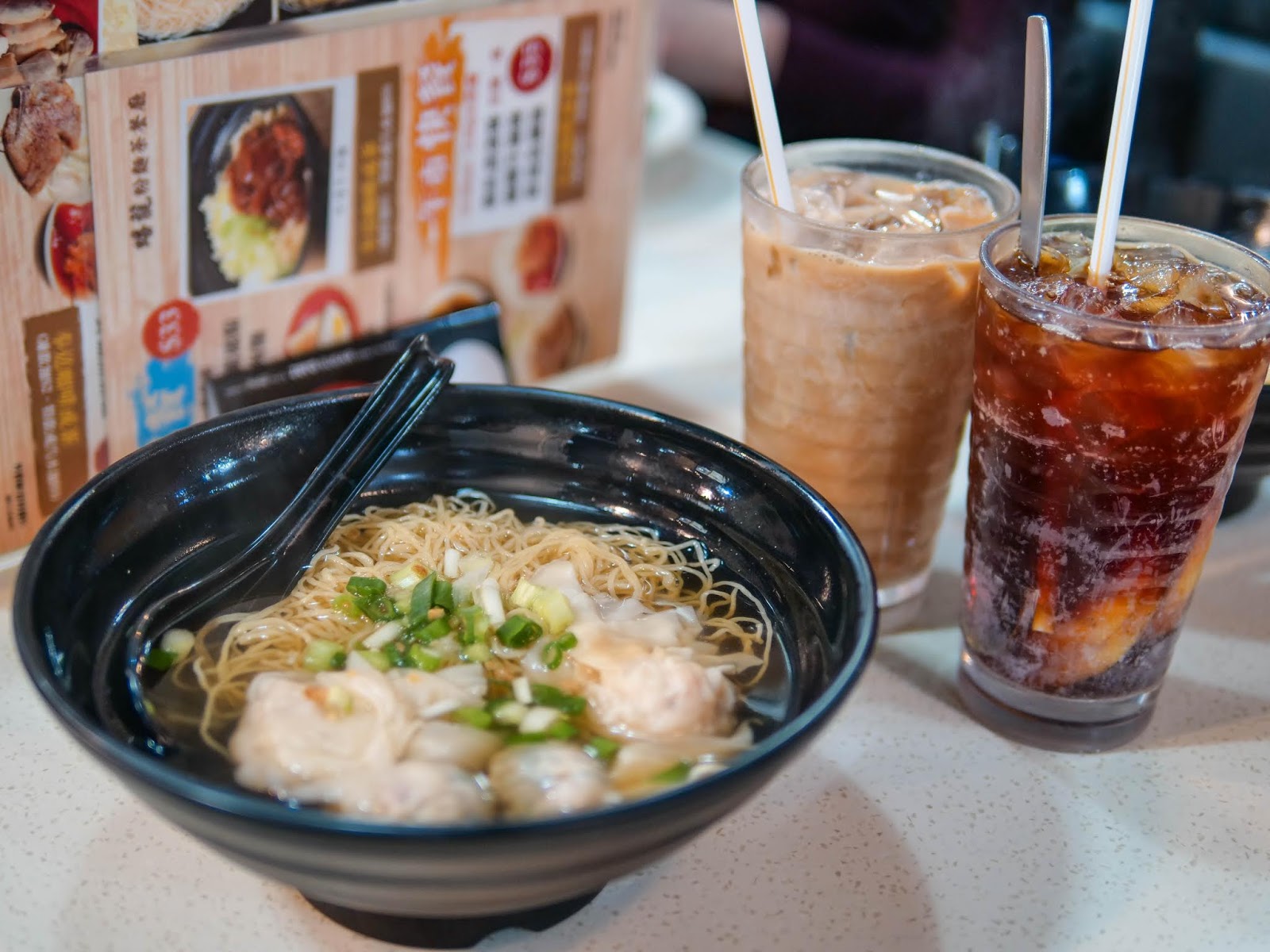
I absolutely loved to try the foods. Among all, I loved dumplings, noodles of any kind, milk tea, pineapple bun, bubble tea, egg tarts, and pretty much anything made of rice. I tried to be as open as possible but I just could not try snake or any kind of insect. 


Among all the things we have visited, there are many temples. I have tried to learn as much as possible about their faith even though I am not a religious person. I am grateful I was able to experience the city with locals for about one week, which made it possible for me to do things that tourists usually don't do.


I grew up with the desire to visit many countries but for some strange reason, Asian countries were not at the top of my list. After visiting Hong Kong, I can't wait to go back and visit more. I wouldn't probably move to Asia permanently but I definitely want to see more of it. It is so different that I was amazed at everything I saw, plus I felt safe everywhere I have been to. I highly recommend it, and if you need any tip, itinerary ideas, or anything about Hong Kong do not hesitate to contact me.

- Cris


A Real Journey Is Played Out Between Sky And Earth.


What is it that makes a trip official? The purchase of tickets, isn’t it? Flying is the action that starts and ends a trip, just like driving, cruising and riding the train. A real journey is the one that takes you so far that you don’t recognise anything as familiar. 


If we go to a new country, engage with the locals, try the foods, and ask for directions, we are in the process of learning and educating ourselves. If we go to an amazing resort and sit by the pool every morning we are just enjoying ourselves (and we need that too). 

People don’t see study abroad programs, volunteering opportunities, or gap years, as “living abroad”. They expect you to come “home” at some point. But once I’ve done all the things I’ve mentioned before, I’ve studied and I’ve paid bills in a country - I lived it. It became a part of me somehow. 

A well-played journey is the one that keeps you in the air, at airports, or on a bus transfer, for something like 12 to sometimes 30 hours; it’s the one that drives you crazy and makes you think it probably wasn’t worth it - but there you are, landing in a new country, arriving at the bus station, inserting the key in your new front door, and that’s when everything starts to make sense. At that point, it’s you facing your future and using your knowledge to make it through. You are going to suffer, to face new challenges, and to fall. But all of it will happen to teach you something and to possibly make you a stronger person.

I experienced something like that when I moved to the United Kingdom this past autumn. I thought I was going to have the perfect experience because I already lived in England once and I liked it. I made the mistake to compare my previous experience to the one that I was about to live: big mistake. Everything was different. I struggled to find a job, my class was smaller, I changed accommodation three times as I couldn't sleep because of the endless noise that surrounded me day and night, I didn't receive the support I thought I was going to get, and at that point I thought: Was it even worth it to invest all the money I did in an institution that doesn't support its students? No. Did I think about dropping out? Many times, but I didn't do it. I was eventually able to leave the dorms and see the positive side of the story: my class was nice, my teachers well prepared: it's going to be good to graduate. I am in a much better mental situation at the moment - I am still stressed about projects, future plans, and lack of fundings for all the things I have in mind, but that is all fixable with dedication and time. 

That said, where are you going next? Do you have any trip coming up? How are you thinking of facing the obstacles you might face during your journey? Let me know in a comment below!

- Cris